B6 Isn’t Everything: Matching Armor Levels (B4, B6, B7) to Real-World Threats in Africa
In the realm of personal and corporate security, armored vehicles have become a necessity in high-risk regions like Africa. The continent's diverse security landscape, marked by urban crime, insurgencies, and terrorism, demands careful consideration when selecting protection levels. While B6 armor is often touted as a gold standard for civilian use, it's not always the optimal choice. This article explores the B4, B6, and B7 armor levels under European CEN standards (EN 1063/BR), explaining their capabilities and how they align with real-world threats across Africa. Understanding these distinctions can mean the difference between adequate protection and overkill—or worse, underprotection.
Understanding Armor Levels: The Basics
Armored vehicles are rated based on their ability to withstand ballistic threats, with levels defined by organizations like the European Committee for Standardization (CEN). These ratings focus on the vehicle's glass, panels, and overall structure. Let's break down the key levels relevant to civilian applications:
- B4 Level: This is the entry point for serious ballistic protection, designed to stop handgun rounds up to .44 Magnum. It typically involves 18-22mm armored glass and lightweight materials like Kevlar for the body. B4 is discreet, adding minimal weight (around 200-300kg to a standard SUV), which preserves vehicle performance and fuel efficiency. It's ideal for low-to-medium threat environments where the primary risks are opportunistic crimes like hijackings or smash-and-grabs.
- B6 Level: Stepping up, B6 offers defense against high-velocity assault rifles, including 7.62x51mm NATO rounds from weapons like the AK-47 or R1 rifle. It requires thicker glass (around 38mm) and hardened steel plates, adding significant weight (up to 800kg or more). This level is popular for high-profile individuals and cash-in-transit operations, providing robust protection without needing special permits in most jurisdictions.
- B7 Level: The pinnacle of civilian armor, B7 can withstand armor-piercing (AP) rounds like 7.62x51mm AP, as well as some explosive threats. It uses advanced composites and even thicker armor, often exceeding 1,000kg in added weight. B7 is reserved for extreme risks, such as military-grade ambushes, but it compromises vehicle handling, speed, and cost—potentially doubling the price of armoring.
These levels aren't just about stopping bullets; they also consider factors like multi-hit capability and spall resistance (preventing fragments from penetrating). However, higher isn't always better—over-armoring can lead to reduced mobility in scenarios where evasion is key.

Figure 1: A typical B6-armored SUV, designed for high-threat urban and rural operations.
Real-World Threats in Africa: A Continent of Contrasts
Africa's security challenges vary dramatically by region. In urban hubs like Johannesburg, South Africa, threats often involve organized crime syndicates targeting professionals with hijackings and armed robberies. Statistics from 2025 show over 20,000 vehicle hijackings annually in South Africa alone, many involving handguns or low-caliber weapons. Moving north to the Sahel region (Mali, Niger, Burkina Faso), jihadist groups like Jama’at Nusrat al-Islam wal Muslimeen (JNIM) and Islamic State in the Greater Sahara (ISGS) pose more severe risks. These include ambushes with AK-47s, improvised explosive devices (IEDs), and even drones for surveillance and attacks.
In West Africa, countries like Nigeria face Boko Haram and Islamic State West Africa Province (ISWAP), which have evolved to use night-vision technology and armed drones. A 2025 report highlighted ISWAP overrunning 15 Nigerian military bases, underscoring the escalation. East Africa, particularly Somalia and Kenya, contends with al-Shabaab, which has acquired ballistic missiles and conducted cross-border raids. Coastal states like Ivory Coast are bolstering defenses against spillover from the Sahel, with ambushes on patrols and bombings along borders.
Other hotspots include the Democratic Republic of Congo (DRC), where militias use small arms in resource-rich areas, and Sudan, amid ongoing civil strife with heavy weaponry. Humanitarian organizations often operate in these zones, requiring vehicles that balance protection with accessibility. The rise of transnational crime, including kidnapping for ransom, further complicates the picture—threats that can escalate from pistols to rifles in seconds.

Figure 2: A risk map highlighting security threats across Africa, with red zones indicating high terrorism and insurgency activity.
Matching Armor to Threats: Practical Recommendations
The key to effective armoring is threat assessment. In South Africa's urban environments, B4 often suffices for executives and families. It protects against common handgun threats during hijackings without turning the vehicle into a tank, allowing for quick escapes on crowded roads. For mining companies in remote areas like the Northern Cape, where syndicates might use rifles, upgrading to B6 provides that extra layer against assault weapons.
In the Sahel and Lake Chad Basin, where groups like JNIM and ISGS employ 7.62mm rounds and IEDs, B6 is the minimum viable option. For example, in Niger, ambushes like the 2017 Tongo Tongo incident involved high-caliber fire that B4 couldn't handle. However, B7 might be overkill unless facing AP rounds or sustained attacks—its weight could hinder mobility on poor roads. Kenya's receipt of 150 M1117 armored vehicles in 2024 reflects this need for B6-equivalent protection against al-Shabaab border threats.
For high-value targets in Nigeria, such as oil executives in the Niger Delta, B7 offers peace of mind against kidnappings that could involve armor-piercing tactics. Yet, in less volatile areas like Ghana, where EU-supplied vehicles combat Sahel spillover, B4 or B6 blends security with practicality. Aid workers in the DRC might opt for B6 to navigate militia-controlled zones, while avoiding B7's fuel inefficiency in long-haul missions.
Cost is a factor: B4 armoring might run $50,000-$80,000, B6 $100,000-$150,000, and B7 over $200,000. Maintenance and fuel costs rise with weight, so matching to actual threats prevents unnecessary expense. Emerging trends, like drone usage by ISWAP, suggest future armoring may include electronic countermeasures, but for now, ballistic levels remain core.
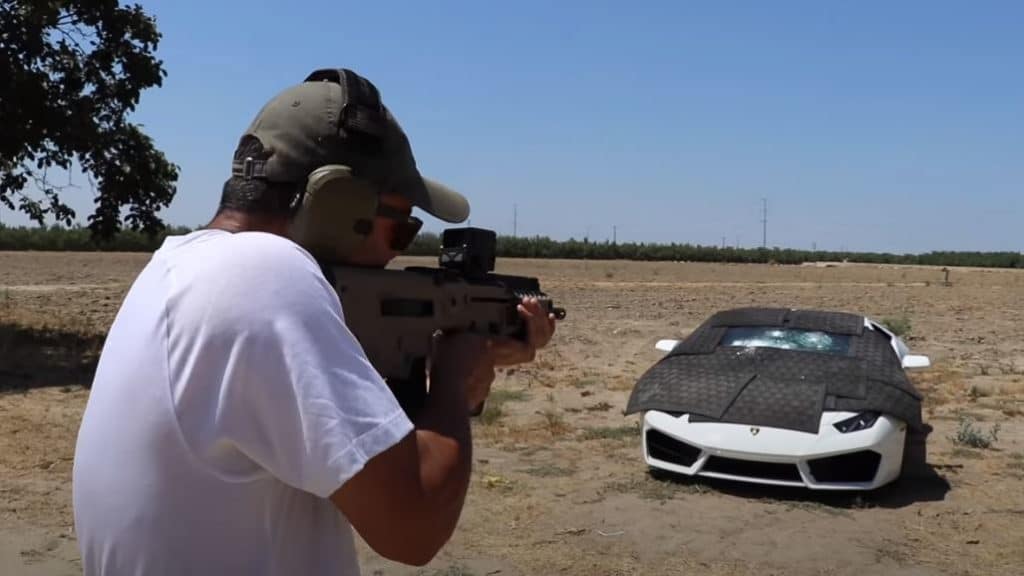
Figure 3: Testing B7 armor against high-velocity rounds, demonstrating its superior resistance.
Conclusion: Beyond B6—Tailored Security for Africa's Challenges
B6 armor is versatile and widely used, but it's not a one-size-fits-all solution. In Africa's multifaceted threat environment—from South African streets to Sahelian battlegrounds—selecting B4, B6, or B7 depends on specific risks, operational needs, and budget. Professionals, NGOs, and governments must conduct thorough assessments, perhaps consulting firms like Armormax or Alpine Armoring, to ensure protection aligns with reality. As threats evolve with technology and geopolitics, so too must our approach to armored security. Ultimately, the right level saves lives without sacrificing mobility or resources.
Comments
Post a Comment