Beyond Bulletproofing: How Armored SUVs Are Becoming Mobile Command Centers with C4I Integration
Posted on February 26, 2026 | By Abigail
In an era where security threats are evolving rapidly, armored vehicles are no longer just about passive protection. What started as bulletproofing for high-profile individuals has transformed into sophisticated mobile command centers equipped with Command, Control, Communications, Computers, and Intelligence (C4I) systems. Armored SUVs, in particular, are at the forefront of this revolution, blending rugged durability with cutting-edge technology to serve military, law enforcement, and private security needs. This blog explores how these vehicles are redefining mobility and operational efficiency in high-stakes environments.
The Evolution of Armored SUVs
Armored vehicles have a long history, dating back to World War I when rudimentary protections were added to cars for battlefield use. Fast forward to today, and the focus has shifted from mere armor plating to integrated systems that enhance situational awareness and command capabilities. Modern armored SUVs, like those based on Chevrolet Suburbans or Toyota Land Cruisers, are now designed as versatile platforms that can withstand ballistic threats while hosting advanced electronics.

Companies like Rezvani and Conquest Vehicles are pushing the boundaries with models such as the Vengeance and Knight XV, which offer not only B7-level armor but also options for tech integrations that turn them into rolling fortresses. These SUVs can now include features like pepper spray dispensers, night vision cameras, and reinforced suspensions to handle the added weight of both armor and tech payloads.
Understanding C4I Integration
C4I stands for Command, Control, Communications, Computers, and Intelligence—a framework originally developed for military operations to streamline decision-making and information flow. In the context of armored SUVs, C4I integration means embedding these elements directly into the vehicle, turning it into a mobile hub for real-time data processing and coordination.
Command and control allow operators to manage missions from within the vehicle, using touchscreen interfaces and AI-assisted planning tools. Communications involve secure radios, satellite links, and cross-band interoperability to connect with teams on the ground or in the air. Computers handle data crunching, from mapping software to threat analysis, while intelligence gathering uses sensors, drones, and surveillance feeds to provide a comprehensive battlefield picture.

For instance, Leonardo DRS's C3VS system delivers secure voice communications for tactical vehicles and mobile command posts, supporting platforms like the M1A2 tank but adaptable to SUVs for convoy coordination and C4ISR network integration.
How Armored SUVs Are Becoming Mobile Command Centers
The transition to mobile command centers is driven by the need for agility in dynamic threat landscapes. Traditional command posts are static and vulnerable, but an armored SUV can move swiftly while maintaining operational continuity. Take the FLYMOTION Guardian, an armored tactical vehicle delivered to the Florida Highway Patrol. It accommodates up to nine personnel, features STANAG Level 2/B7 armor, and includes integrated communications for deploying unmanned systems safely.
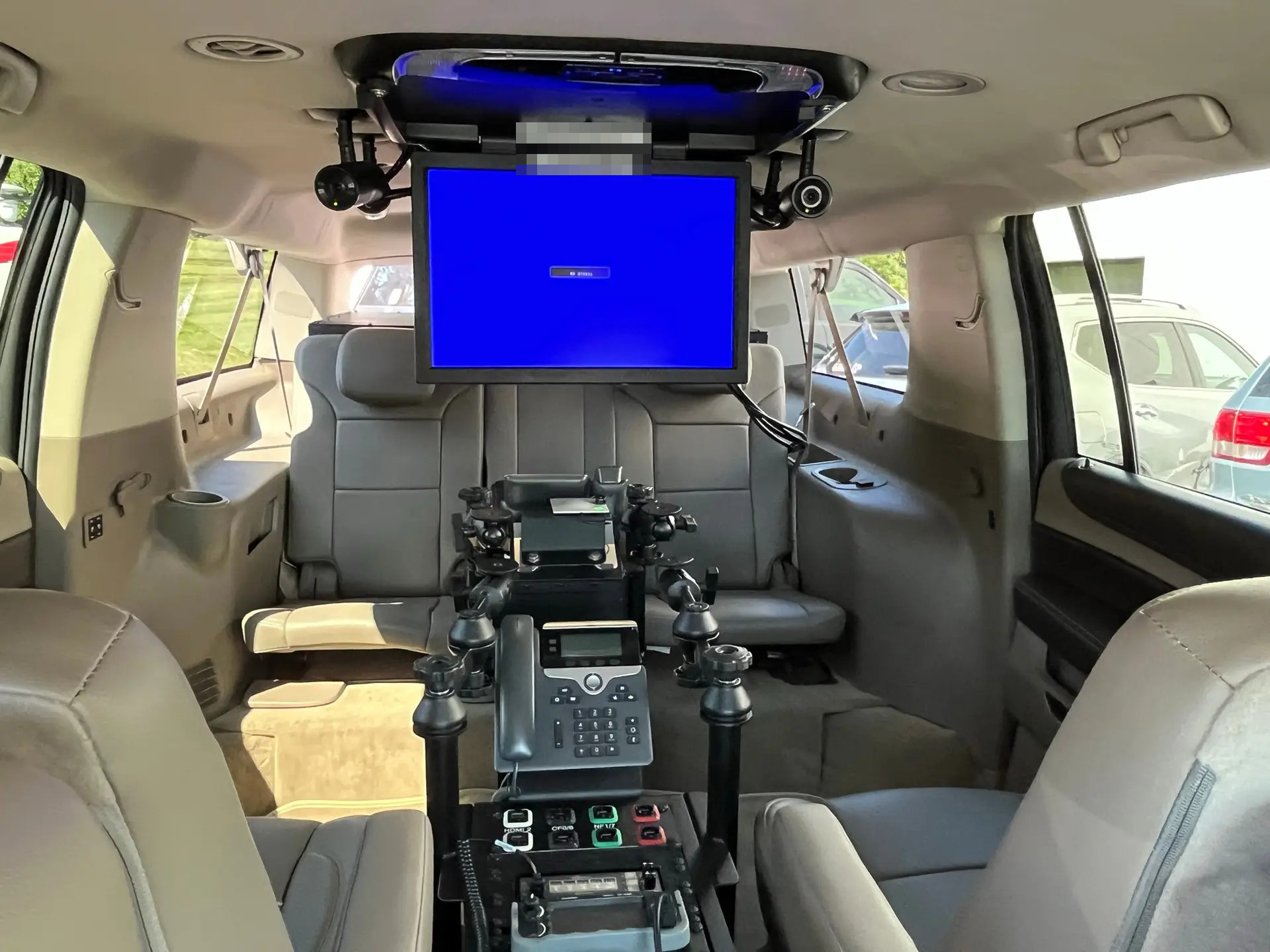
Inside these vehicles, you'll find workstations with multiple displays, high-power radios, and even augmented reality tools like HoloLenses for remote assistance. Power management is crucial; modern SUVs come with enhanced electrical systems to support C4I loads, including battle management systems and counter-UAV jammers. Elbit Systems' Rhino command vehicle exemplifies this, equipped with C4I workstations, networking solutions, and satellite communications for seamless integration into larger command chains.
Retrofitting is also common. The U.S. Department of State's Countermeasures and Integration Section outfits vehicles like Chevrolet Suburbans with C4I life-safety systems, including digital video recorders, portable assessment kits, and mobile command setups. This allows for rapid deployment in diplomatic security or emergency response scenarios.
Key Features and Technologies
Advanced armored SUVs boast a suite of features that make them true mobile command centers:
- Ballistic and Blast Protection: Using composite armors and V-hull designs to achieve high STANAG levels without excessive weight.
- Communication Suites: Secure, multi-band radios and satellite uplinks for uninterrupted connectivity.
- Surveillance and Intelligence: Integrated cameras, sensors, and drone launch capabilities for real-time intel.
- Command Workstations: Ergonomic setups with touchscreens, AI analytics, and interoperability with external networks.
- Power and Mobility: Hybrid-ready electrical systems and off-road capabilities to sustain operations in remote areas.

Companies like Balkantel and Shladot offer customizable solutions on platforms ranging from pickup trucks to heavy SUVs, ensuring that C4I vehicles meet specific mission requirements.
Benefits for Users
The integration of C4I into armored SUVs provides numerous advantages. For military forces, it enables decentralized command, reducing vulnerability to targeted strikes. Law enforcement benefits from enhanced tactical response, as seen in the Florida Highway Patrol's use of the Guardian for high-threat operations.
In private security, executives and VIPs gain not just protection but also the ability to conduct business securely on the move. The mobility aspect ensures that command functions aren't tied to fixed locations, improving response times and operational flexibility. Moreover, these systems enhance safety by allowing remote deployment of assets, minimizing human exposure to danger.
Case Studies and Real-World Applications
One notable example is the unique Chevy Suburban command vehicle delivered to the military, featuring advanced interiors with monitors, communication devices, and control panels for mission coordination. Similarly, Elbit's Rhino has been deployed in various scenarios, providing C4I capabilities in a compact, armored package.
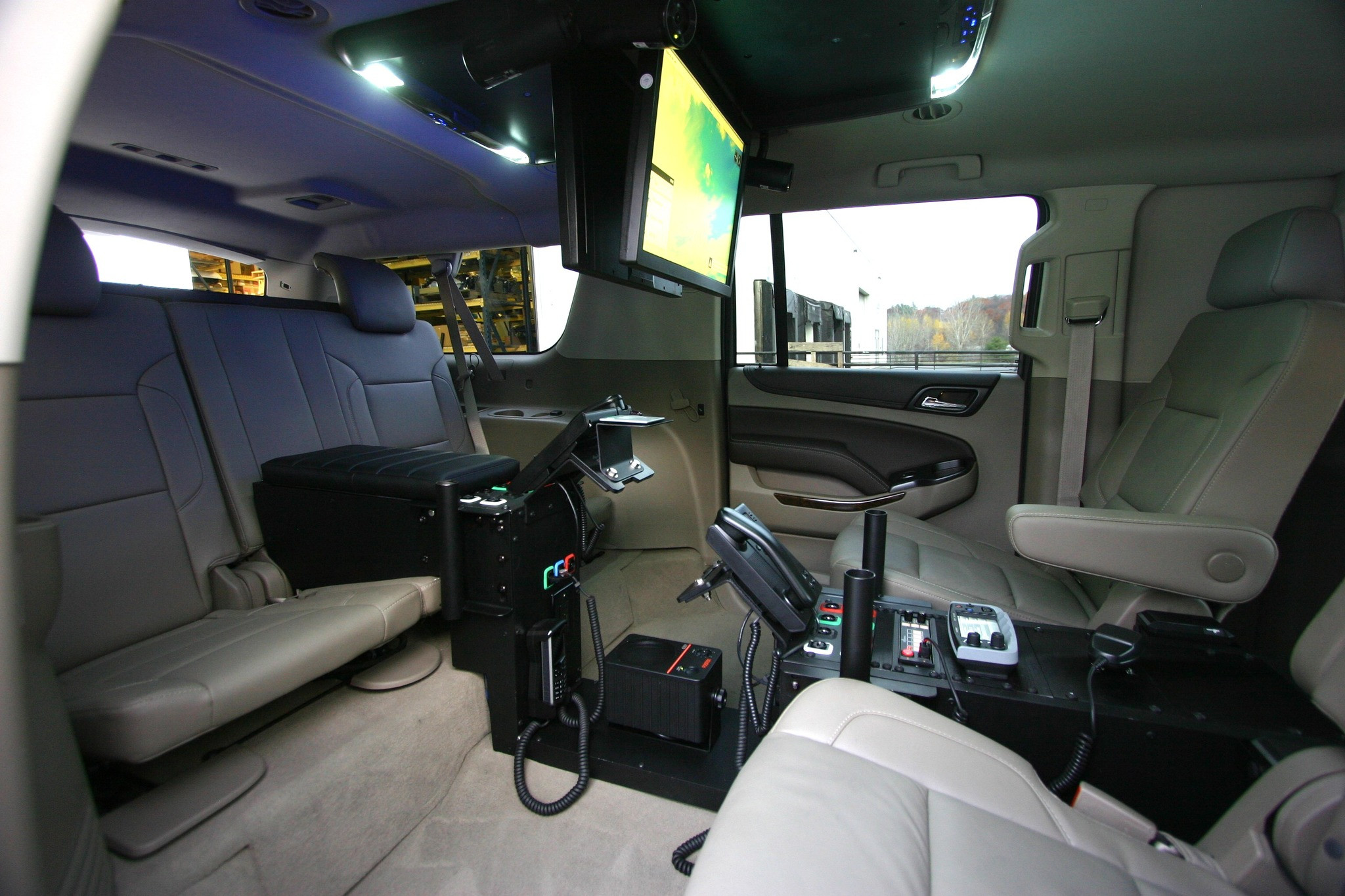
In civilian contexts, retrofitted Suburbans used by diplomatic security teams incorporate C4I for convoy protection and emergency management. These vehicles have proven invaluable in volatile regions, where quick decision-making can mean the difference between success and failure.
Future Trends
Looking ahead, the future of armored SUVs lies in further integration of AI, autonomous features, and 5G/6G communications. Expect more hybrid and electric models to reduce logistical footprints while maintaining power for C4I systems. Advances in materials will make vehicles lighter and more agile, and augmented reality will become standard for enhanced operator interfaces.
As threats become more sophisticated, so too will these mobile command centers, potentially incorporating counter-drone tech and cyber defenses as core components.
Conclusion
Armored SUVs have transcended their bulletproof origins to become indispensable mobile command centers with C4I integration. By combining protection, mobility, and advanced technology, they empower users across sectors to operate effectively in uncertain environments. As innovation continues, these vehicles will undoubtedly play a pivotal role in shaping the future of security and defense.
Word count: approximately 1050
Comments
Post a Comment