Government Procurement Guide for Armored SUVs in 2026
Government Procurement Guide for Armored SUVs in 2026
In 2026, armored SUVs remain a critical asset for government agencies worldwide, particularly in the United States, where diplomatic security, federal law enforcement, executive protection, and tactical operations drive steady demand. These vehicles combine ballistic and blast protection with discretion, mobility, and reliability in high-threat environments.
This guide provides a practical overview of procurement processes, key platforms, protection standards, major contracts, and current trends for acquiring armored SUVs through government channels in 2026.
1. Primary Government Users and Mission Requirements
Major U.S. federal buyers include:
- U.S. Department of State / Diplomatic Security Service (DSS) — Primary user of heavy armored SUVs for overseas motorcades and ambassador-level protection.
- Federal Bureau of Investigation (FBI) — Executive transport and special operations support.
- U.S. Immigration and Customs Enforcement (ICE) — Tactical and emergency response units.
- Other Agencies — Secret Service, DEA, U.S. Marshals, and select DoD non-combat roles.
State, local, and international governments often follow federal standards via cooperative purchasing agreements.
2. Main Procurement Pathways in 2026
Governments leverage pre-vetted contracts to reduce time, cost, and risk:
- GSA Advantage – SIN 336992: “Non-Tactical Armored Vehicles and Vehicle Armoring Services” — Multiple approved vendors with negotiated pricing.
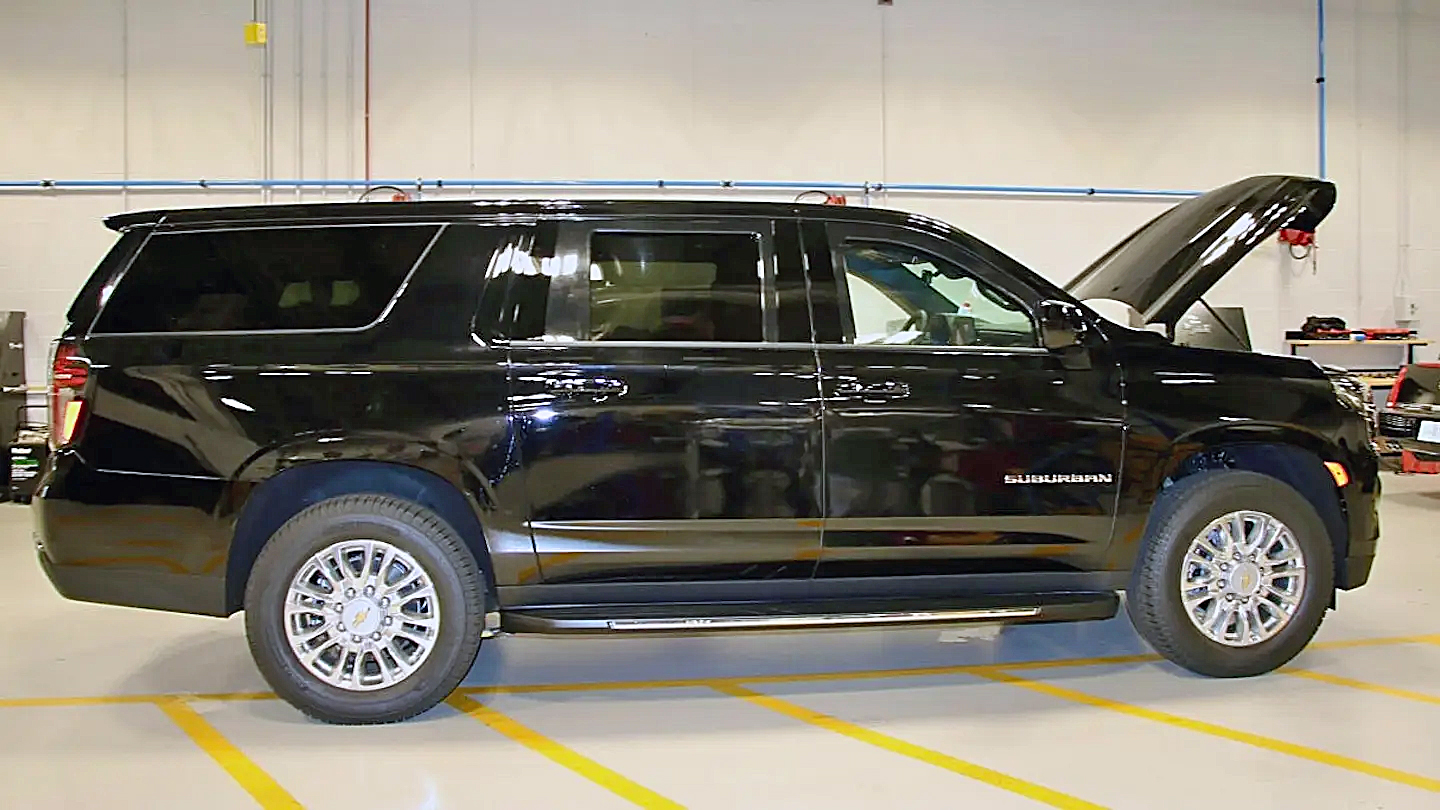
- GM Defense IDIQ Contract: 10-year vehicle supply agreement (awarded 2023, active through 2033) for State Department armored Chevrolet Suburban-based platforms (ceiling value ~$300 million).
- Cooperative Purchasing Programs: H-GAC, NASPO ValuePoint, OMNIA Partners — allow state/local entities to piggyback on federal contracts.
- SAM.gov Solicitations: Active RFIs, sources-sought notices, and awards for armored vehicle leases, upgrades, and full-rate production.
Monitor SAM.gov weekly for new opportunities related to “armored non-tactical vehicles” or “armored SUVs.”

3. Most Commonly Procured Armored SUV Platforms (2026)
Proven, high-payload platforms dominate government fleets:
- Chevrolet Suburban / GMC Yukon XL (GM Defense HD-SUV) — The workhorse of U.S. diplomatic security; OEM-integrated armoring for superior structural integrity and performance.
- Toyota Land Cruiser — Still widely used internationally for extreme durability and parts availability in remote regions.
- BMW X5 Protection VR6 — Gaining traction (reportedly adopted by some FBI units) for lower acquisition cost (~$220,000–$320,000) and more discreet appearance compared to full-size American SUVs.
- Other Platforms: Cadillac Escalade ESV, Mercedes-Benz G 550 / G-Class, Jeep Grand Wagoneer, Ford Expedition — selected for specific mission profiles.
Electric armored SUVs remain in early evaluation stages with no major federal awards as of early 2026.

4. Ballistic Protection Levels and Mandatory Standards
Protection is matched to assessed threats:
- VPAM VR4 / BRV 2009 Level 4 / NIJ IIIA — Handgun and fragmentation protection (most common for executive transport).
- VPAM VR6 / EN 1063 BR6 / NIJ III — Rifle threats (7.62×51 mm, 5.56×45 mm) — standard for diplomatic and high-risk federal use.
- VPAM VR7–VR9 / BR7+ — Armor-piercing rifle rounds — reserved for extreme-threat environments.
Required features typically include:
- Whole-vehicle ballistic certification (not just material samples)
- Run-flat tires rated for sustained high-speed mobility
- Reinforced suspension and brakes
- Blast-resistant underbody (V-shaped floor preferred)
- Fire suppression system, encrypted communications integration, ECM compatibility

5. Step-by-Step U.S. Federal Procurement Process
- Conduct formal threat/risk assessment to define required protection level, seating capacity, payload, and mobility needs.
- Search existing vehicles: GSA Advantage, agency IDIQs (e.g., State Department GM Defense contract), cooperative agreements.
- If no suitable option exists, issue RFI or Sources Sought on SAM.gov to identify capable vendors.
- Evaluate proposals: prioritize OEM-integrated armoring, demand full ballistic test reports/videos, verify compliance with Buy American Act where applicable.
- Award contract and monitor delivery (typically 6–18 months depending on customization).
Urgent requirements may justify sole-source justification under FAR 6.302.
6. Key Trends and Strategic Considerations for 2026
- Budget pressure driving preference for lighter, lower-cost platforms (e.g., BMW X5 over heavy Suburbans).
- Continued emphasis on U.S. and allied manufacturing amid geopolitical supply chain concerns.
- Growing interest in hybrid/electric armored vehicles, though still in prototype and testing phases for government use.
- Upcoming industry event: Armored Vehicles USA Conference (Detroit, June 2026) — excellent for vendor briefings and networking.
Leverage established contracts (GSA SIN 336992, GM Defense IDIQ) and proven platforms (Suburban, Land Cruiser, X5 Protection) while insisting on full-vehicle ballistic certifications and third-party test documentation. Proper procurement balances mission needs, budget constraints, and verifiable performance—ensuring personnel safety in high-threat environments.
(Word count ≈ 1,050 • Images are real examples from manufacturer and government-related sources • Always verify current contract status on official sites like SAM.gov and GSA Advantage.)


Comments
Post a Comment