Armored Rapid Response Vehicles for Counter-Terrorism Units
Introduction
In an era where terrorism poses a persistent and evolving threat to global security, counter-terrorism units require specialized tools to respond effectively and safely. Among these, Armored Rapid Response Vehicles (ARRVs) stand out as critical assets. These vehicles are designed to provide protection, mobility, and tactical versatility in high-risk environments, enabling special forces, SWAT teams, and other elite units to neutralize threats while minimizing casualties. ARRVs bridge the gap between standard police vehicles and full-scale military armored personnel carriers, offering a balance of speed, armor, and adaptability suited for urban and rural counter-terrorism operations.
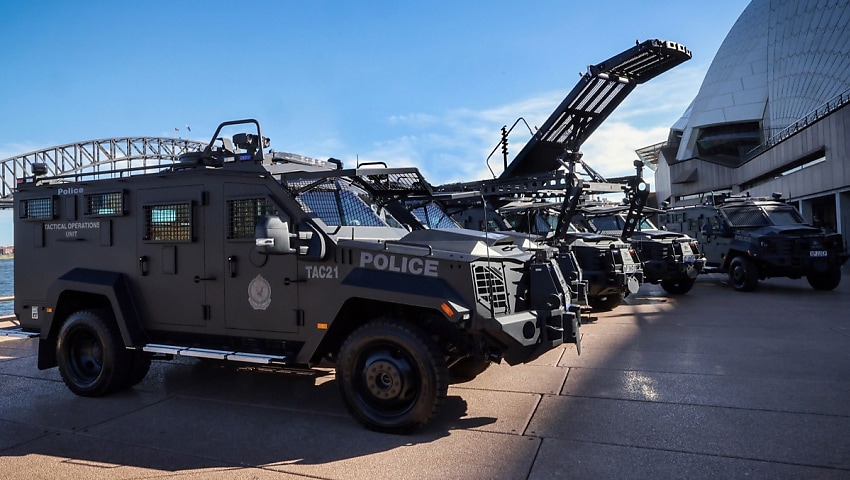
The concept of ARRVs emerged from the need for rapid intervention in scenarios like hostage rescues, active shooter incidents, and terrorist barricades. Unlike traditional armored vehicles used in conventional warfare, ARRVs prioritize quick deployment, maneuverability in confined spaces, and integration with law enforcement tactics. They are often built on commercial chassis, such as Ford F-Series trucks, modified with ballistic armor, advanced communication systems, and specialized equipment like battering rams or elevated platforms. This allows them to navigate city streets, breach structures, and provide cover for operators under fire.
Counter-terrorism units worldwide, from the U.S. SWAT teams to international special forces, rely on ARRVs for their operations. For instance, vehicles like the Lenco BearCat have been deployed in numerous high-profile incidents, demonstrating their value in protecting lives and resolving crises efficiently. As terrorism tactics evolve—incorporating improvised explosive devices (IEDs), urban ambushes, and coordinated attacks—the role of ARRVs becomes even more pivotal. This article explores the history, technology, key models, applications, advantages, challenges, and future trends of ARRVs in counter-terrorism, providing a comprehensive overview of their indispensable function in modern security landscapes.
Historical Development
The origins of ARRVs can be traced back to the mid-20th century, when law enforcement began adapting military surplus vehicles for civilian use. Post-World War II, police departments in the United States and Europe started using armored cars for riot control and high-risk arrests. However, the modern ARRV concept truly took shape in the 1970s and 1980s, driven by rising urban terrorism. Events like the Munich Olympics massacre in 1972 highlighted the need for specialized vehicles that could enable rapid, protected responses to terrorist sieges.
In the U.S., the formation of SWAT teams in the late 1960s, initially by the Los Angeles Police Department, spurred innovation. Early vehicles were makeshift, often converted vans or trucks with added steel plates. By the 1990s, dedicated manufacturers like Lenco Industries began producing purpose-built ARRVs. The Lenco BearCat, introduced in 2001, marked a significant milestone, evolving from the larger BEAR model to a more agile variant suited for tactical teams. This vehicle was designed with input from law enforcement, incorporating features like NIJ Level IV armor capable of withstanding .50 caliber rounds and run-flat tires for sustained mobility.
Globally, similar developments occurred. In Europe, vehicles like the Jankel Guardian were adapted for counter-terrorism, often featuring elevated tactical systems for accessing multi-story buildings. In the Middle East and Africa, nations facing insurgencies invested in ARRVs for border security and rapid response. For example, Tunisia received donated Pit-Bull vehicles from the U.S. in 2018 to bolster its counter-terrorism brigade. The post-9/11 era accelerated advancements, with increased funding for homeland security leading to widespread adoption. Today, ARRVs are integral to doctrines like the U.S. Department of Homeland Security's active shooter response protocols, reflecting decades of refinement in response to real-world threats.
The evolution also involved technological integration. Early models focused on basic armor, but modern ARRVs incorporate digital systems for surveillance, communication, and non-lethal crowd control. This historical progression underscores how ARRVs have adapted to the asymmetric nature of terrorism, where speed and protection are paramount over sheer firepower.
Key Technologies and Features
ARRVs are engineered with a suite of advanced technologies to meet the demands of counter-terrorism operations. At their core is ballistic armor, typically rated to standards like CEN B6/B7 or NIJ Level IV, which protects against high-velocity rifle rounds, shrapnel, and IED blasts. Materials such as composite ceramics, aramid fibers, and ultra-high-molecular-weight polyethylene provide lightweight yet robust shielding, ensuring the vehicle remains agile.
Mobility is another cornerstone. ARRVs often feature four-wheel drive systems, independent suspensions, and powerful diesel engines (e.g., 6.7L V8 turbodiesels producing over 400 horsepower) for rapid acceleration and off-road capability. Run-flat tires allow continued operation even after punctures, crucial for escaping ambushes. Some models, like the INKAS Sentry TIV, include vertical assault ramps for quick troop deployment or building breaches.
Integrated electronics enhance situational awareness. High-definition cameras, thermal imaging, and 360-degree surveillance systems provide real-time feeds to operators inside and command centers. Communication suites support encrypted radios, satellite links, and integration with drones for reconnaissance. Specialized features include battering rams for forced entry, gas dispensers for crowd control, and robotic arms for handling suspicious devices.
Safety innovations extend to crew protection: blast-attenuating seats mitigate shockwaves, fire suppression systems handle incendiary attacks, and emergency egress hatches ensure quick exits. Customization is key; vehicles can be configured for medical evacuation (MedCat variants), explosive ordnance disposal, or VIP protection. Energy efficiency and stealth modes, with low-noise electric hybrids emerging, add to their versatility. These technologies collectively transform ARRVs into mobile fortresses, enabling counter-terrorism units to operate with confidence in volatile scenarios.
Notable Models and Their Specifications
Several ARRVs have become benchmarks in counter-terrorism. The Lenco BearCat, built on a Ford F-550 chassis, is one of the most widely used. It seats up to 12 operators, weighs around 19,000 lbs, and offers protection against .50 BMG rounds. Features include a rotating roof hatch for snipers, hydraulic rams, and optional MARS elevated tactics systems for accessing heights up to 17 feet. Deployed by over 1,000 agencies worldwide, it's praised for its urban maneuverability.
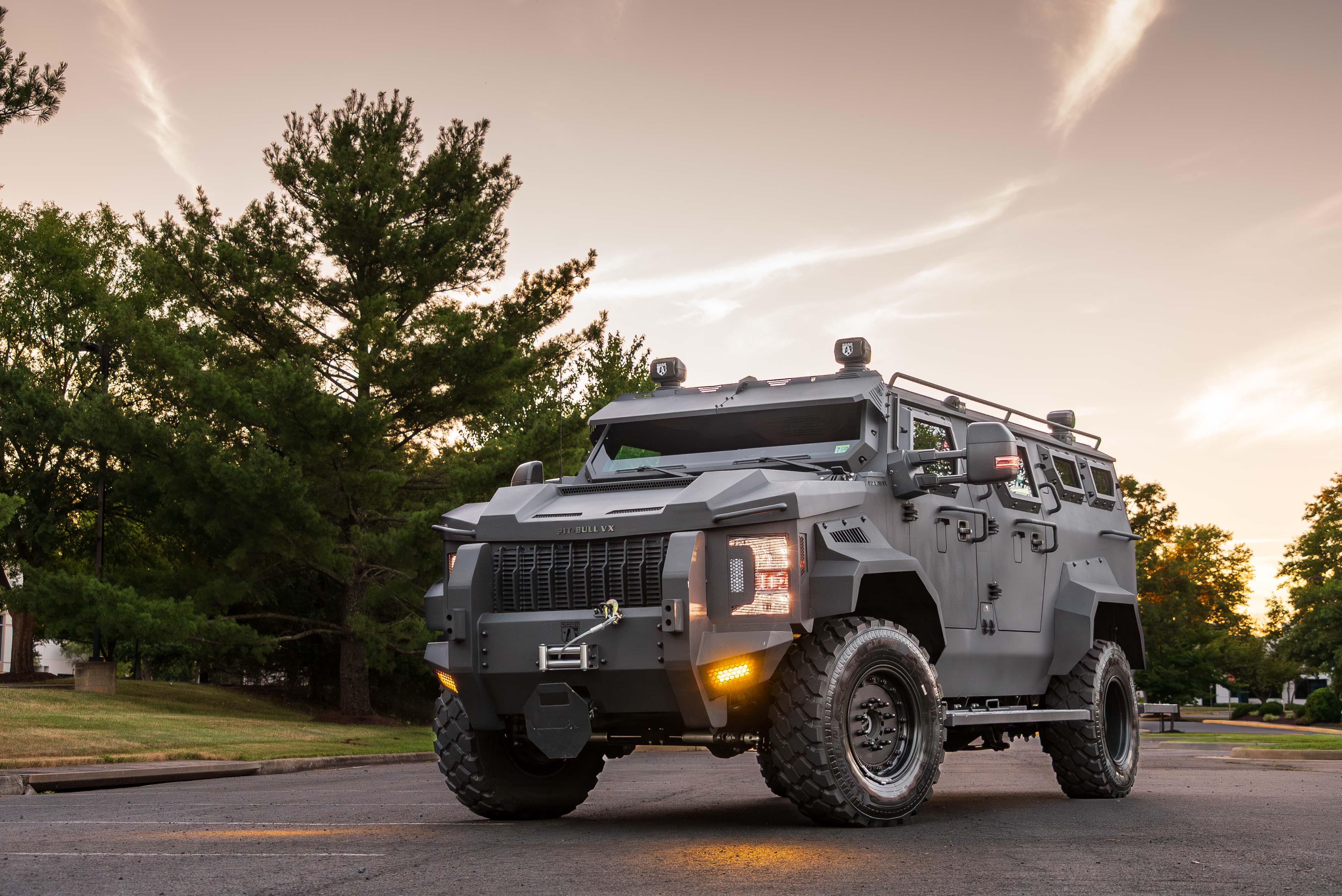
The Alpine Armoring Pit-Bull VX, on a Ford F-600 platform, provides A12 (B7+) level protection, stopping .50 caliber armor-piercing rounds. It comes in enclosed APC and tactical truck variants, seating 4-10 personnel. Upgrades include blast-resistant flooring, 360-degree cameras, and winches for obstacle clearance. Combat-proven in Tunisia and Mexico, it's favored for its reliability in harsh environments.
INKAS Sentry TIV emphasizes rapid intervention with its vertical assault ramp, tested by special units globally. Based on a Mercedes-Benz Sprinter or similar, it offers CEN B6 armor, seats 8-10, and integrates with robotics for EOD tasks. Its modular design allows quick reconfiguration for hostage rescue or perimeter security.
The Armored Group’s BATT series, including the BATT-X and BATT-UMG, focuses on light armored versatility. These Toyota-based vehicles provide STANAG Level 2 protection, off-road prowess, and options for turret mounts. They excel in reconnaissance and convoy protection, with weights under 10,000 lbs for air transportability.
Internationally, the Jankel Guardian and Patriot3 CTAV combine armored platforms with elevated systems for counter-terror assaults. These F550-based vehicles reach elevations for breaching aircraft or buildings, enhancing tactical options in sieges. Each model reflects tailored innovations, from blast mitigation to electronic warfare integration, making them essential for diverse counter-terrorism needs.
Applications in Counter-Terrorism Operations
ARRVs play multifaceted roles in counter-terrorism. In hostage situations, they provide shielded transport for negotiators and assault teams, as seen in the 2015 Paris attacks where French RAID units used armored vehicles for extraction. Their rams and ramps enable swift breaches, reducing exposure time.
For active shooter responses, ARRVs offer mobile cover, allowing officers to approach threats safely. U.S. protocols post-Columbine emphasize rapid containment, where vehicles like the BearCat facilitate this by deploying teams under fire.
In border security and anti-insurgency ops, ARRVs support patrols and raids. Tunisia's Pit-Bull units secure borders against terrorist infiltration, while in Iraq, similar vehicles aid convoy protection against IEDs. They also integrate with unmanned systems for reconnaissance, minimizing risks.
Non-lethal applications include crowd control during protests with terrorist elements, using gas dispensers or acoustic devices. Overall, ARRVs enhance operational tempo, enabling proactive counter-terrorism in urban warfare scenarios.
Advantages and Challenges
ARRVs offer unparalleled advantages: superior protection reduces casualties, rapid mobility shortens response times, and versatility supports diverse missions from rescue to EOD. Their integration with tech like AI-driven surveillance boosts effectiveness.
However, challenges persist. High costs (often $200,000-$500,000 per unit) strain budgets, especially for smaller agencies. Maintenance requires specialized skills, and their militarized appearance can escalate public tensions, as debated in U.S. police militarization discussions. Urban navigation limitations and fuel inefficiency are operational hurdles. Balancing these requires ongoing training and policy refinements.

Future Trends
Future ARRVs will incorporate electrification for stealth, autonomous navigation for risk reduction, and enhanced AI for threat prediction. Lightweight nanomaterials will improve armor without sacrificing speed. Integration with drones and cyber defenses will counter emerging threats like swarming attacks. Global collaboration may standardize designs for interoperability in multinational operations.
Conclusion
ARRVs are vital to counter-terrorism, evolving from basic armored trucks to sophisticated tactical platforms. As threats grow more complex, their role in safeguarding societies will expand, underscoring the need for continued innovation and investment.
Armored Rapid Response Vehicles for Counter-Terrorism Units
Introduction
In an era where terrorism poses a persistent and evolving threat to global security, counter-terrorism units require specialized tools to respond effectively and safely. Among these, Armored Rapid Response Vehicles (ARRVs) stand out as critical assets. These vehicles are designed to provide protection, mobility, and tactical versatility in high-risk environments, enabling special forces, SWAT teams, and other elite units to neutralize threats while minimizing casualties. ARRVs bridge the gap between standard police vehicles and full-scale military armored personnel carriers, offering a balance of speed, armor, and adaptability suited for urban and rural counter-terrorism operations.
The concept of ARRVs emerged from the need for rapid intervention in scenarios like hostage rescues, active shooter incidents, and terrorist barricades. Unlike traditional armored vehicles used in conventional warfare, ARRVs prioritize quick deployment, maneuverability in confined spaces, and integration with law enforcement tactics. They are often built on commercial chassis, such as Ford F-Series trucks, modified with ballistic armor, advanced communication systems, and specialized equipment like battering rams or elevated platforms. This allows them to navigate city streets, breach structures, and provide cover for operators under fire.
Counter-terrorism units worldwide, from the U.S. SWAT teams to international special forces, rely on ARRVs for their operations. For instance, vehicles like the Lenco BearCat have been deployed in numerous high-profile incidents, demonstrating their value in protecting lives and resolving crises efficiently. As terrorism tactics evolve—incorporating improvised explosive devices (IEDs), urban ambushes, and coordinated attacks—the role of ARRVs becomes even more pivotal. This article explores the history, technology, key models, applications, advantages, challenges, and future trends of ARRVs in counter-terrorism, providing a comprehensive overview of their indispensable function in modern security landscapes.
Historical Development
The origins of ARRVs can be traced back to the mid-20th century, when law enforcement began adapting military surplus vehicles for civilian use. Post-World War II, police departments in the United States and Europe started using armored cars for riot control and high-risk arrests. However, the modern ARRV concept truly took shape in the 1970s and 1980s, driven by rising urban terrorism. Events like the Munich Olympics massacre in 1972 highlighted the need for specialized vehicles that could enable rapid, protected responses to terrorist sieges.
In the U.S., the formation of SWAT teams in the late 1960s, initially by the Los Angeles Police Department, spurred innovation. Early vehicles were makeshift, often converted vans or trucks with added steel plates. By the 1990s, dedicated manufacturers like Lenco Industries began producing purpose-built ARRVs. The Lenco BearCat, introduced in 2001, marked a significant milestone, evolving from the larger BEAR model to a more agile variant suited for tactical teams. This vehicle was designed with input from law enforcement, incorporating features like NIJ Level IV armor capable of withstanding .50 caliber rounds and run-flat tires for sustained mobility.
Globally, similar developments occurred. In Europe, vehicles like the Jankel Guardian were adapted for counter-terrorism, often featuring elevated tactical systems for accessing multi-story buildings. In the Middle East and Africa, nations facing insurgencies invested in ARRVs for border security and rapid response. For example, Tunisia received donated Pit-Bull vehicles from the U.S. in 2018 to bolster its counter-terrorism brigade. The post-9/11 era accelerated advancements, with increased funding for homeland security leading to widespread adoption. Today, ARRVs are integral to doctrines like the U.S. Department of Homeland Security's active shooter response protocols, reflecting decades of refinement in response to real-world threats.
The evolution also involved technological integration. Early models focused on basic armor, but modern ARRVs incorporate digital systems for surveillance, communication, and non-lethal crowd control. This historical progression underscores how ARRVs have adapted to the asymmetric nature of terrorism, where speed and protection are paramount over sheer firepower.
Key Technologies and Features
ARRVs are engineered with a suite of advanced technologies to meet the demands of counter-terrorism operations. At their core is ballistic armor, typically rated to standards like CEN B6/B7 or NIJ Level IV, which protects against high-velocity rifle rounds, shrapnel, and IED blasts. Materials such as composite ceramics, aramid fibers, and ultra-high-molecular-weight polyethylene provide lightweight yet robust shielding, ensuring the vehicle remains agile.
Mobility is another cornerstone. ARRVs often feature four-wheel drive systems, independent suspensions, and powerful diesel engines (e.g., 6.7L V8 turbodiesels producing over 400 horsepower) for rapid acceleration and off-road capability. Run-flat tires allow continued operation even after punctures, crucial for escaping ambushes. Some models, like the INKAS Sentry TIV, include vertical assault ramps for quick troop deployment or building breaches.
Integrated electronics enhance situational awareness. High-definition cameras, thermal imaging, and 360-degree surveillance systems provide real-time feeds to operators inside and command centers. Communication suites support encrypted radios, satellite links, and integration with drones for reconnaissance. Specialized features include battering rams for forced entry, gas dispensers for crowd control, and robotic arms for handling suspicious devices.
Safety innovations extend to crew protection: blast-attenuating seats mitigate shockwaves, fire suppression systems handle incendiary attacks, and emergency egress hatches ensure quick exits. Customization is key; vehicles can be configured for medical evacuation (MedCat variants), explosive ordnance disposal, or VIP protection. Energy efficiency and stealth modes, with low-noise electric hybrids emerging, add to their versatility. These technologies collectively transform ARRVs into mobile fortresses, enabling counter-terrorism units to operate with confidence in volatile scenarios.
Notable Models and Their Specifications
Several ARRVs have become benchmarks in counter-terrorism. The Lenco BearCat, built on a Ford F-550 chassis, is one of the most widely used. It seats up to 12 operators, weighs around 19,000 lbs, and offers protection against .50 BMG rounds. Features include a rotating roof hatch for snipers, hydraulic rams, and optional MARS elevated tactics systems for accessing heights up to 17 feet. Deployed by over 1,000 agencies worldwide, it's praised for its urban maneuverability.
The Alpine Armoring Pit-Bull VX, on a Ford F-600 platform, provides A12 (B7+) level protection, stopping .50 caliber armor-piercing rounds. It comes in enclosed APC and tactical truck variants, seating 4-10 personnel. Upgrades include blast-resistant flooring, 360-degree cameras, and winches for obstacle clearance. Combat-proven in Tunisia and Mexico, it's favored for its reliability in harsh environments.
INKAS Sentry TIV emphasizes rapid intervention with its vertical assault ramp, tested by special units globally. Based on a Mercedes-Benz Sprinter or similar, it offers CEN B6 armor, seats 8-10, and integrates with robotics for EOD tasks. Its modular design allows quick reconfiguration for hostage rescue or perimeter security.
The Armored Group’s BATT series, including the BATT-X and BATT-UMG, focuses on light armored versatility. These Toyota-based vehicles provide STANAG Level 2 protection, off-road prowess, and options for turret mounts. They excel in reconnaissance and convoy protection, with weights under 10,000 lbs for air transportability.
Internationally, the Jankel Guardian and Patriot3 CTAV combine armored platforms with elevated systems for counter-terror assaults. These F550-based vehicles reach elevations for breaching aircraft or buildings, enhancing tactical options in sieges. Each model reflects tailored innovations, from blast mitigation to electronic warfare integration, making them essential for diverse counter-terrorism needs.
Applications in Counter-Terrorism Operations
ARRVs play multifaceted roles in counter-terrorism. In hostage situations, they provide shielded transport for negotiators and assault teams, as seen in the 2015 Paris attacks where French RAID units used armored vehicles for extraction. Their rams and ramps enable swift breaches, reducing exposure time.
For active shooter responses, ARRVs offer mobile cover, allowing officers to approach threats safely. U.S. protocols post-Columbine emphasize rapid containment, where vehicles like the BearCat facilitate this by deploying teams under fire.
In border security and anti-insurgency ops, ARRVs support patrols and raids. Tunisia's Pit-Bull units secure borders against terrorist infiltration, while in Iraq, similar vehicles aid convoy protection against IEDs. They also integrate with unmanned systems for reconnaissance, minimizing risks.
Non-lethal applications include crowd control during protests with terrorist elements, using gas dispensers or acoustic devices. Overall, ARRVs enhance operational tempo, enabling proactive counter-terrorism in urban warfare scenarios.
Advantages and Challenges
ARRVs offer unparalleled advantages: superior protection reduces casualties, rapid mobility shortens response times, and versatility supports diverse missions from rescue to EOD. Their integration with tech like AI-driven surveillance boosts effectiveness.
However, challenges persist. High costs (often $200,000-$500,000 per unit) strain budgets, especially for smaller agencies. Maintenance requires specialized skills, and their militarized appearance can escalate public tensions, as debated in U.S. police militarization discussions. Urban navigation limitations and fuel inefficiency are operational hurdles. Balancing these requires ongoing training and policy refinements.
Future Trends
Future ARRVs will incorporate electrification for stealth, autonomous navigation for risk reduction, and enhanced AI for threat prediction. Lightweight nanomaterials will improve armor without sacrificing speed. Integration with drones and cyber defenses will counter emerging threats like swarming attacks. Global collaboration may standardize designs for interoperability in multinational operations.
Conclusion
ARRVs are vital to counter-terrorism, evolving from basic armored trucks to sophisticated tactical platforms. As threats grow more complex, their role in safeguarding societies will expand, underscoring the need for continued innovation and investment.


Comments
Post a Comment